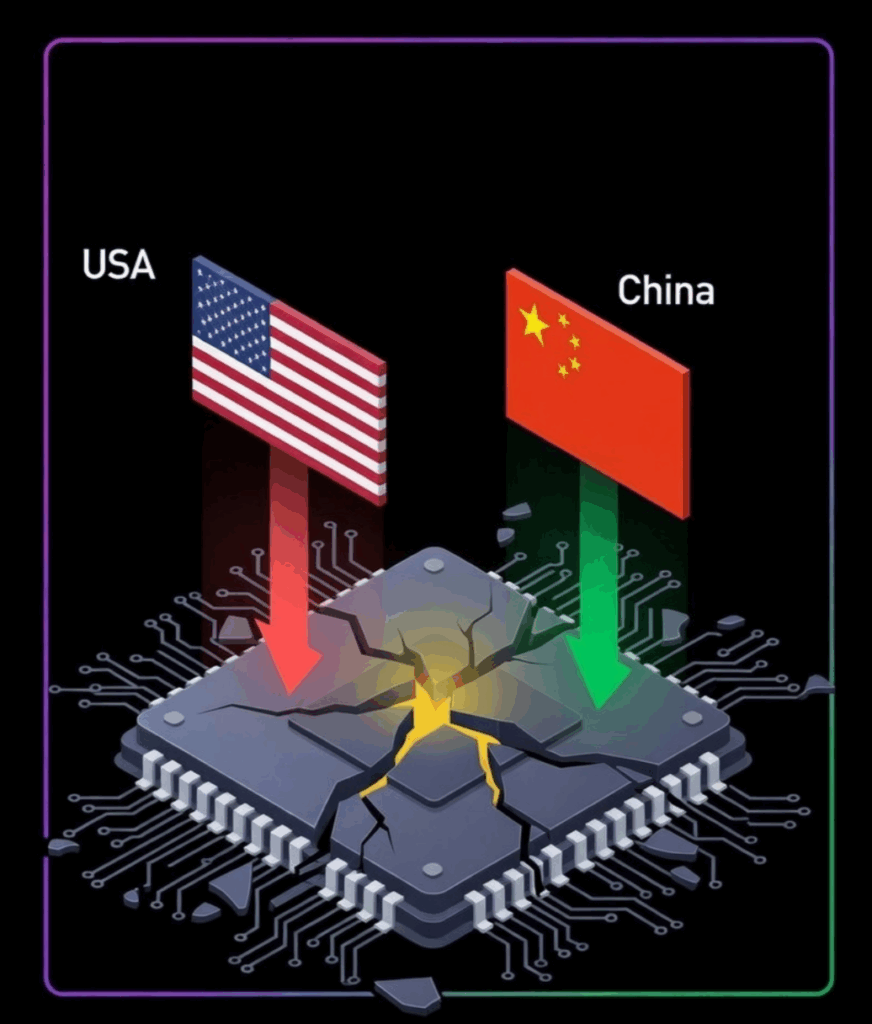
Recent developments in the semiconductor sector highlight how quickly regulatory and geopolitical factors can reshape global supply chains — even for leading-edge technologies.
According to a Financial Times report (via Yahoo Finance, March 5, 2026), NVIDIA has ceased production of H200 AI chips specifically allocated for the Chinese market. The company has redirected manufacturing capacity at TSMC toward its next-generation Vera Rubin platform. This follows months of uncertainty: U.S. export licenses were granted earlier this year (with conditions including a 25% fee), yet no meaningful shipments have occurred, and Beijing has not approved large-scale imports.
As a result, NVIDIA has generated zero data center revenue from China in recent quarters and has excluded any such contribution from its forward guidance.
Article link: Nvidia pulls the plug on China H200 production as Vera Rubin takes priority
While this concerns AI accelerators rather than automotive components, the parallel is clear for the automotive industry:
Advanced semiconductors (for ADAS, autonomous systems, infotainment, or electrification), software platforms, and even standard electronic modules increasingly depend on global, geopolitically exposed supply networks.Export controls, import approvals, local content rules, or sudden policy shifts can delay, restrict, or eliminate access to critical technologies — regardless of whether they are high-end or commodity-level.
Please take a look at our Automotive HPC Comparison. You can see there that in the case of HPCs the market is quite narrow and the solutions are all proprietary and cannot be replaced against each other.
For OEMs and suppliers, this underscores the value of integrating realistic supply chain scenario planning early in concept and business case development. Assumptions about:
- availability
- lead times
- market access
need to be tested against a range of regulatory and geopolitical outcomes to build more resilient technology roadmaps.
Curious to hear perspectives from the automotive community: How are you factoring multi-jurisdictional risks into your long-term tech sourcing strategies?
Leave a Reply