Category: Legal

  • Nvidia Stops Production of H200 Chips for China

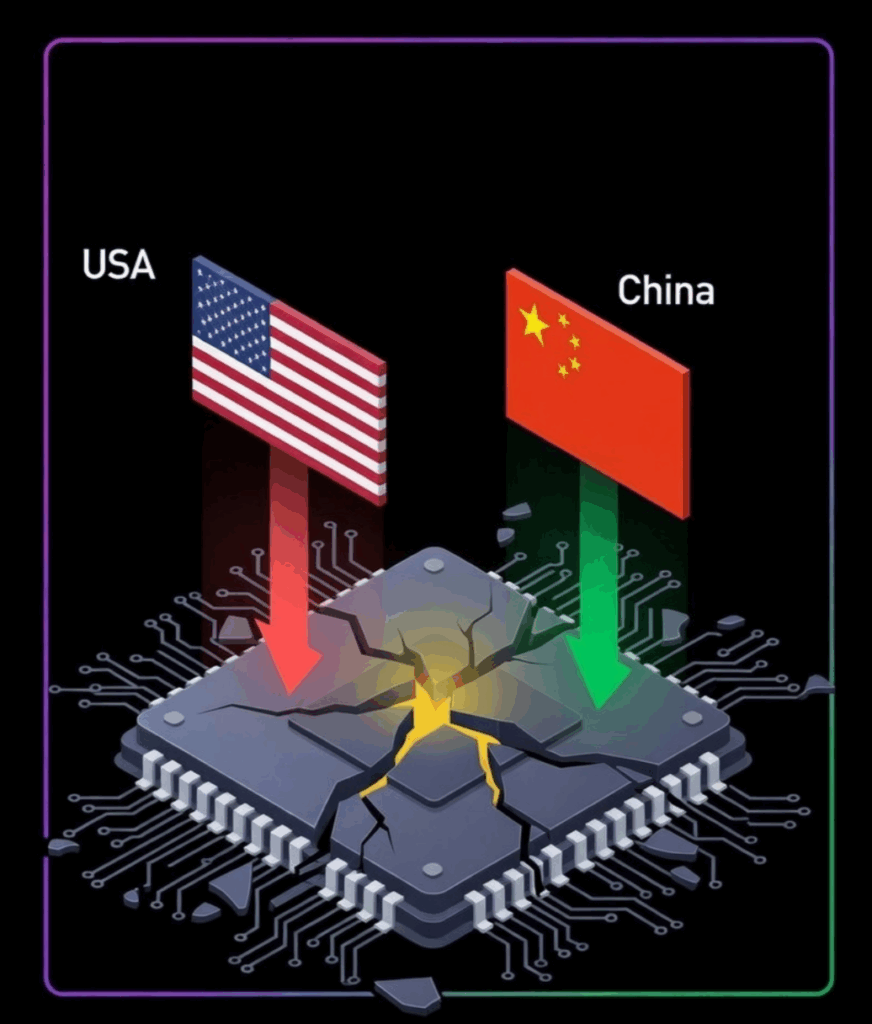
    Broken AI Chip between the USA and China

    Recent developments in the semiconductor sector highlight how quickly regulatory and geopolitical factors can reshape global supply chains — even for leading-edge technologies.

    According to a Financial Times report (via Yahoo Finance, March 5, 2026), NVIDIA has ceased production of H200 AI chips specifically allocated for the Chinese market. The company has redirected manufacturing capacity at TSMC toward its next-generation Vera Rubin platform. This follows months of uncertainty: U.S. export licenses were granted earlier this year (with conditions including a 25% fee), yet no meaningful shipments have occurred, and Beijing has not approved large-scale imports.

    As a result, NVIDIA has generated zero data center revenue from China in recent quarters and has excluded any such contribution from its forward guidance.

    Article link: Nvidia pulls the plug on China H200 production as Vera Rubin takes priority

    While this concerns AI accelerators rather than automotive components, the parallel is clear for the automotive industry:


    Advanced semiconductors (for ADAS, autonomous systems, infotainment, or electrification), software platforms, and even standard electronic modules increasingly depend on global, geopolitically exposed supply networks.Export controls, import approvals, local content rules, or sudden policy shifts can delay, restrict, or eliminate access to critical technologies — regardless of whether they are high-end or commodity-level.

    Please take a look at our Automotive HPC Comparison. You can see there that in the case of HPCs the market is quite narrow and the solutions are all proprietary and cannot be replaced against each other.

    For OEMs and suppliers, this underscores the value of integrating realistic supply chain scenario planning early in concept and business case development. Assumptions about:

    • availability
    • lead times
    • market access

    need to be tested against a range of regulatory and geopolitical outcomes to build more resilient technology roadmaps.

    Curious to hear perspectives from the automotive community: How are you factoring multi-jurisdictional risks into your long-term tech sourcing strategies?

  • Lessons from the Tesla Key Largo Verdict: What Non-US Vehicle OEMs Need to Know About Product Liability

    Lessons from the Tesla Key Largo Verdict: What Non-US Vehicle OEMs Need to Know About Product Liability

    In a landmark ruling on August 1, 2025, a federal jury in Miami held Tesla 33% liable for a fatal 2019 crash in Key Largo, Florida, involving its Autopilot system.

    The crash occurred when driver George McGee, distracted while using Autopilot, collided with a parked SUV, killing 22-year-old Naibel Benavides Leon and injuring her boyfriend, Dillon Angulo.

    The jury awarded $329 million in damages, including $200 million in punitive damages, citing flaws in Autopilot’s design and inadequate warnings for foreseeable misuse.

    Tesla plans to appeal, but the verdict underscores the risks of autonomous driving technology and sets a precedent for liability in the U.S. market.

    Five Key Learnings and Takeaways for Non-US Vehicle OEMs

    1. Understand U.S. Strict Liability Standards: The U.S. applies strict liability for defective products, meaning manufacturers can be held accountable for injuries caused by design flaws or inadequate warnings, even without negligence. Non-US OEMs must ensure autonomous systems are robustly designed to handle normal and foreseeable misuse scenarios, like driver distraction, to avoid liability.
    2. Anticipate Foreseeable Misuse: The Tesla case highlighted that driver distraction is considered foreseeable misuse in the U.S. OEMs must design systems with safeguards—such as enhanced driver monitoring or fail-safes for unexpected road conditions—and provide clear warnings to mitigate risks from predictable human errors.
    3. Prepare for High Punitive Damages: Unlike many jurisdictions where punitive damages are rare, U.S. courts can impose substantial penalties to deter unsafe practices, as seen with Tesla’s $200 million punitive award. Non-US OEMs should prioritize safety in design and marketing to avoid costly penalties in the U.S. market.
    4. Navigate State-by-State Variations: U.S. product liability laws vary by state, leading to inconsistent outcomes. The Tesla verdict in Florida may influence other jurisdictions, but OEMs must tailor compliance strategies to account for regional differences, consulting local legal experts to ensure robust defense strategies.
    5. Strengthen Post-Sale Monitoring and Communication: U.S. courts expect manufacturers to monitor products post-sale and issue warnings or recalls if defects emerge. Non-US OEMs should establish proactive monitoring systems and clear communication channels to address potential issues with autonomous technologies swiftly.

    Conclusion

    The Tesla Key Largo verdict serves as a wake-up call for non-US vehicle OEMs entering or operating in the U.S. market. By prioritizing robust system design, anticipating driver misuse, and understanding the U.S.’s unique liability landscape, manufacturers can mitigate risks and avoid costly litigation. As autonomous driving technology evolves, proactive safety measures and clear user guidance will be critical to navigating the complex U.S. legal environment successfully.

WordPress Cookie Plugin by Real Cookie Banner