Tag: viableworks

  • Volkswagen’s Three Architecture Gamble

    How suppliers can win without picking the wrong horse.

    Volkswagen Group will use XPENG’s technology for its next-generation China vehicles.

    That’s not just a sourcing decision. It means VW is now running three parallel architectures for its future models: MEB+, Rivian’s RVTech, and XPeng’s CEA platform.

    For suppliers, this creates a familiar but uncomfortable situation. If you align your product development with the wrong architecture, you risk losing access to high-volume programs. If you try to serve all three separately, your R&D costs multiply.

    The winning approach is different.
    👉 ZF Group demonstrated it when they sold their #ADAS division and doubled down on what they do best: brake-by-wire, steer-by-wire, integrated chassis control. Those components work identically whether they’re bolted into a NIO, a VW on MEB+, or a future Rivian-powered Audi.

    We explored this strategy in a new analysis. It covers:
    👉 Which deep-tech components travel across all architectures
    👉 How to validate your product against multiple platforms simultaneously
    👉 Why “platform-agnostic” is not a compromise but a competitive advantage

    The full piece is here for anyone navigating VW’s multi-platform reality: https://viable works/sdv/vws_three_architecture_gamble
  • Automotive Operating Systems Comparison updated

    Automotive Operating Systems Comparison updated

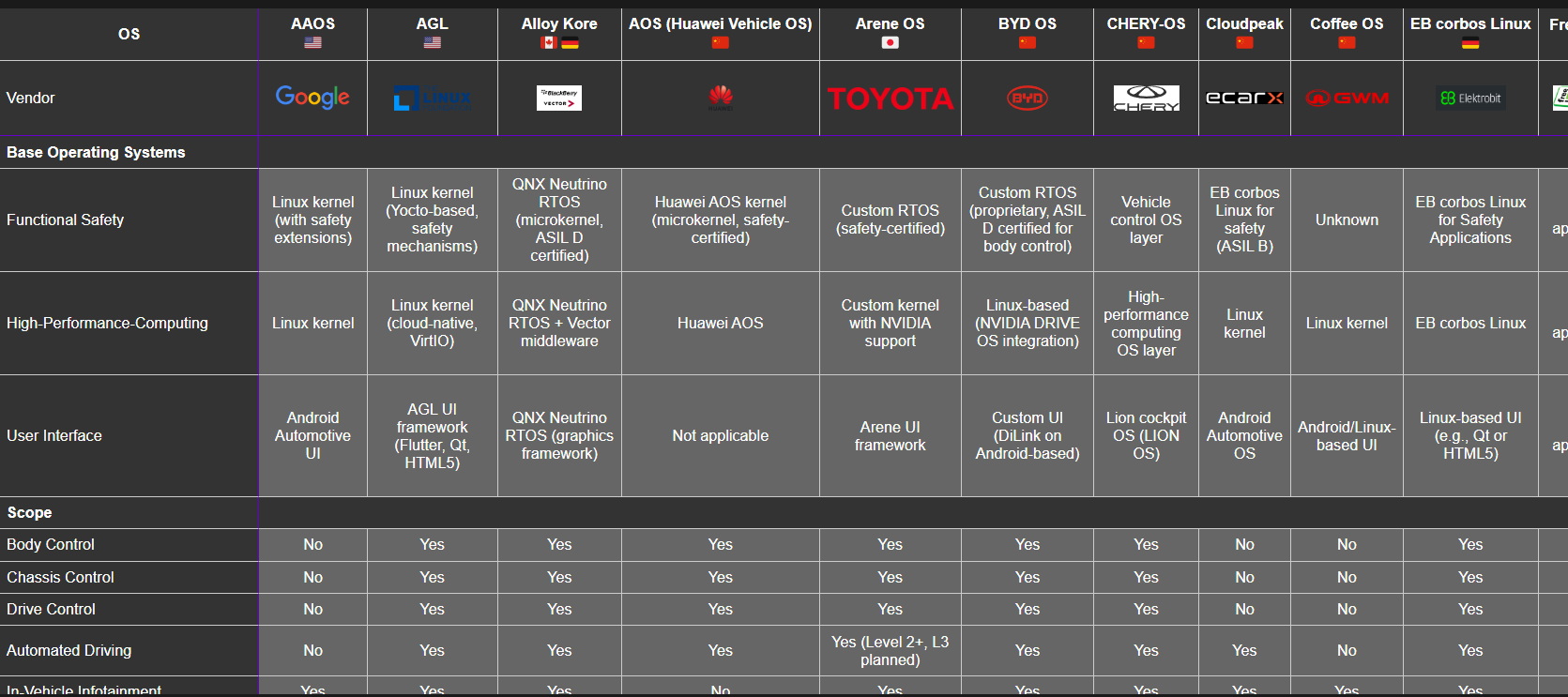
    🚀 Automotive Operating System Comparison updated to version Q1/2026 🚀

    Key enhancements from version Q3/2025:

    ✅ Detailed #OTA comparison
    ✅ Breakdown of Base OS in #FuSa, #HPC and #UI
    ✅ More conservative rating, if or if not a feature is fulfilled
    ✅ Change from Grok to DeepSeek AI as main #LLM for better accessibility of 🇨🇳 pages
    ✅ Added #Eclipse S-Core, Veecle-OS, #SafeRTOS and #RedHat #IVOS.

    Automotive Operating System Comparison

  • Towards Truly Viable Autonomy

    V2X Connected Autonomous Vehicle

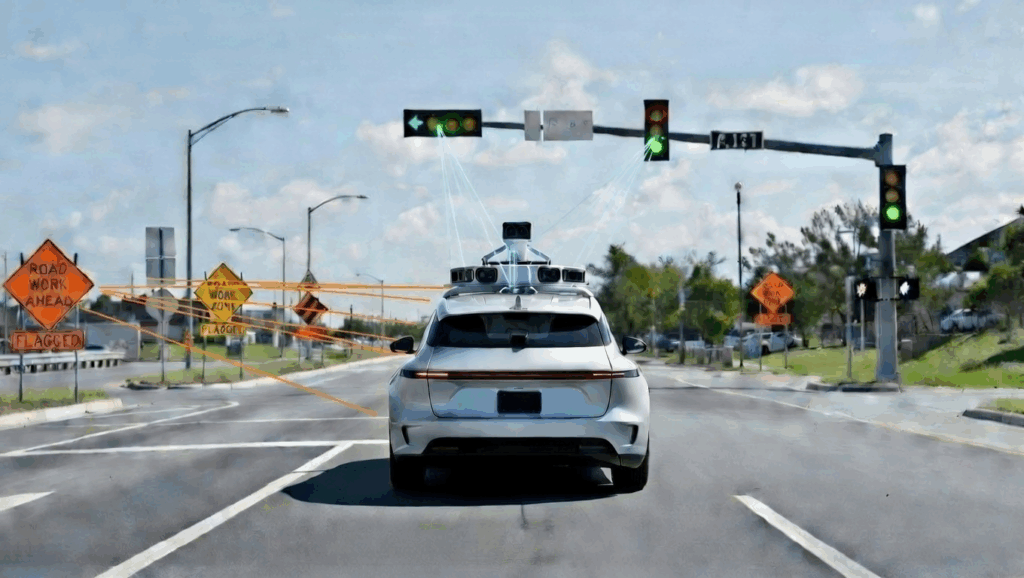
    Ten years after unveiling the groundbreaking CHAD prototype at CES 2016, the dream of fully autonomous driving feels closer than ever – yet a fundamental conflict persists: systems must still choose between natural, human-like driving behavior and verifiable safety without self-caused accidents. In this new article, Benedikt Schonlau reflects on a decade of progress and reveals the three foundational enablers that will finally cut this Gordian knot:

    • Functionally safe by-wire chassis
    • Targeted V2X infrastructure at critical points
    • Reliable connectivity with selective remote support

    Discover why these elements are essential to deliver comfortable, confident autonomy that earns real-world trust – without compromise. Read the full article: Towards Truly Viable Autonomy

    #AutonomousDriving #V2X #FunctionalSafety #SDV #viableworks

WordPress Cookie Plugin by Real Cookie Banner